Planning Permission Refused: Your Options for Appeal and Resubmission
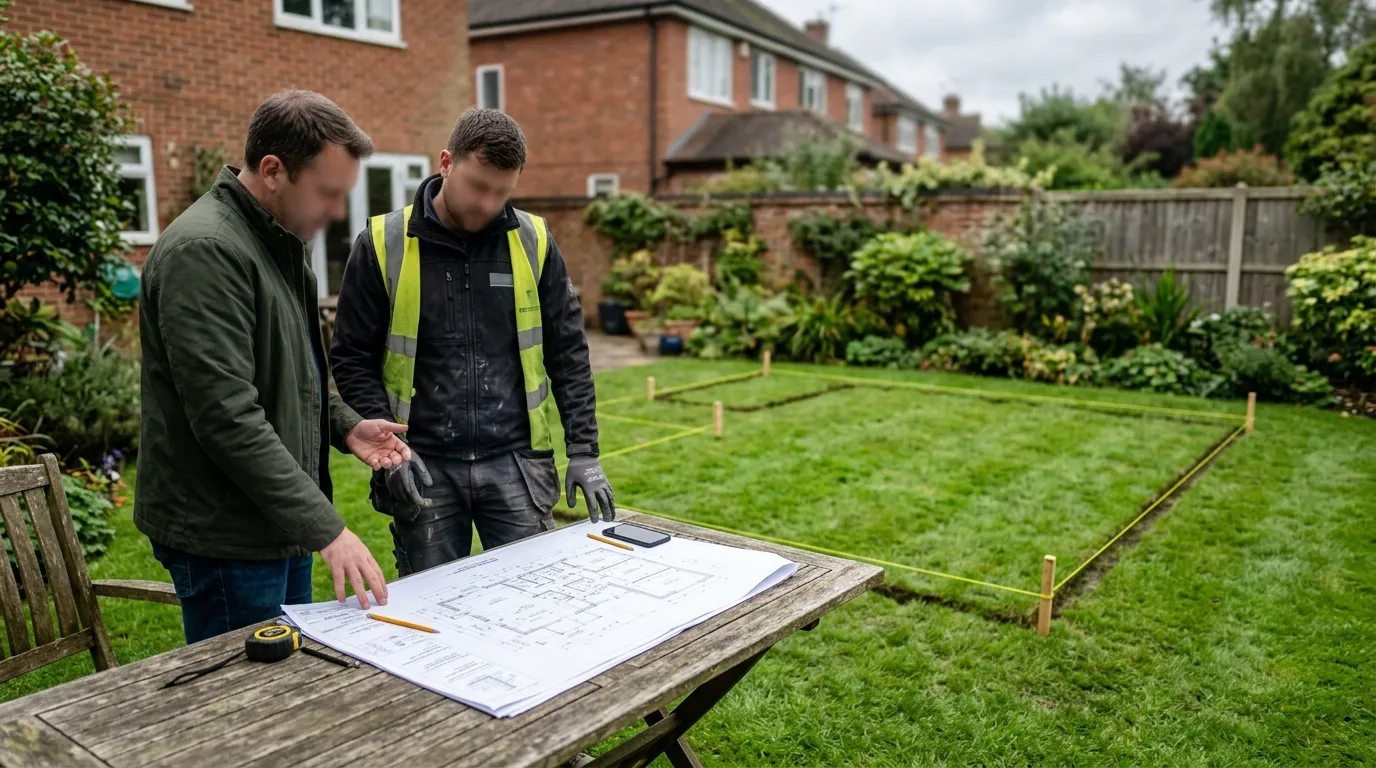
If your planning permission has been refused, you have three realistic routes: change the scheme and resubmit, appeal to the Planning Inspectorate, or, in narrow legal cases only, challenge the decision in the High Court. Start by reading the refusal notice carefully, because every reason the council gives is a problem you either fix on resubmission or argue against on appeal. For most householder projects, resubmitting a revised scheme is faster than appealing.
A refusal is not the end of the project. Around a third of planning applications that go to appeal are overturned, and many more get approved second time round after the applicant addresses the council’s concerns. The right move depends on why you were refused.
First step: understand exactly why you were refused
When a local planning authority (LPA) refuses an application, it must give written reasons on the decision notice. These reasons are numbered, and each one cites a specific planning policy: a policy from the council’s Local Plan, a chapter of the National Planning Policy Framework, or a material consideration such as overlooking, loss of light, highway safety, or design.
Read each reason and sort it into one of two groups:
- Fixable by changing the design. Things like a roof that is too high, a window that overlooks a neighbour, a footprint that is too close to a boundary, or missing information such as a drainage strategy or ecology survey. These point you toward resubmission.
- A genuine disagreement on planning judgement. The council thinks the principle of development is wrong, or that the harm outweighs the benefit, and you believe an inspector would see it differently. These point you toward an appeal.
If any reason is unclear, phone the case officer named on the decision notice and ask them to explain. They cannot promise to approve a future scheme, but they can usually tell you whether a smaller or amended proposal would overcome their objection. That single conversation often saves months.
Your three options compared
| Option | Best when | Time limit | Typical cost | Likely timescale |
|---|---|---|---|---|
| Resubmit a revised scheme | The refusal reasons are fixable by design changes | No statutory limit, though many councils ask you to resubmit promptly | Application fee again, plus redrawn plans | 8 weeks for a householder decision once submitted |
| Appeal to the Planning Inspectorate | You believe the council got the planning judgement wrong and the scheme should stand as designed | 12 weeks (householder) or 6 months (most other applications) | Free to lodge; you may pay an agent or planning consultant | Around 20 weeks for written appeals, often longer |
| Judicial review / statutory challenge | The decision was legally flawed, not just wrong on the merits | 6 weeks from the decision | High; you need a solicitor and barrister | Several months, court-dependent |
Option 1: Fix the scheme and resubmit
For most refusals, especially householder extensions and outbuildings, this is the sensible first move. You take the council’s reasons, amend the drawings to remove the objections, and submit a fresh application.
It is worth being clear on cost. England used to allow a “free go”, a fee-free resubmission of a refused or withdrawn application. That concession was withdrawn on 6 December 2023, and the transitional arrangements that kept it alive for earlier applications have since ended. In almost all cases now, resubmitting means paying the application fee again. Resubmission is still usually quicker and less involved than an appeal, but it is no longer free, so weigh the fee against your chances before you commit.
To give a resubmission the best chance:
- Address every refusal reason, not just the easy ones. An inspector or case officer will not approve a scheme that solves three problems and ignores the fourth.
- Consider a pre-application enquiry first. Most councils offer a paid pre-app service where a planning officer reviews your revised proposal and tells you in writing whether it is likely to be acceptable. For a scheme that has already been refused once, this is usually money well spent.
- Engage neighbours early if objections drove the refusal. A redesigned roof or a repositioned window that removes overlooking can turn an objector neutral.
- Keep a clear paper trail showing how each change responds to each reason. Reference this in your covering letter or design and access statement.
Resubmission keeps the decision local, which means the same 8-week determination period for a householder application rather than the months an appeal takes.
Option 2: Appeal to the Planning Inspectorate
Appeal when you believe the council reached the wrong planning judgement and you want the original scheme approved as designed. Appeals in England are decided by the Planning Inspectorate, an independent national body, not the council. You appeal through the GOV.UK planning appeals service.
Who can appeal and when
Only the applicant (or their agent) can appeal a refusal. Neighbours and objectors cannot appeal a grant of permission. The deadlines are strict and the Inspectorate will reject anything submitted late:
- Householder applications (extensions, loft conversions, outbuildings on a dwelling): 12 weeks from the date on the decision notice.
- Most other applications (full planning, minor commercial, listed building consent): up to 6 months from the decision date.
- Enforcement-related appeals: as little as 28 days, so check immediately if a notice is involved.
Count from the date printed on the decision letter, not the date you received it.
The three appeal procedures
You do not get to choose freely; the Inspectorate decides what is proportionate, but most cases go the written route.
- Written representations. You, the council, and any interested parties submit written statements. An inspector reads everything and usually visits the site. This is by far the most common route, covering the large majority of appeals, and householder appeals always use a streamlined version of it.
- Hearing. A more informal, round-the-table discussion led by the inspector, used for cases with a few issues that benefit from questions and answers.
- Public inquiry. A formal, court-like process with advocates and witnesses, reserved for large or contentious schemes.
Be realistic about your odds and the wait
Appeals are not a rubber stamp. Across 2025/26 roughly a third of planning appeals succeeded, with householder appeals doing a little better than average at around 36 per cent. The median time for a written appeal to be decided is around 20 weeks, and hearings and inquiries take longer. So an appeal can easily run six months or more from lodging to decision, during which the project is frozen.
One more thing to weigh: an inspector decides the appeal on the scheme as refused. You cannot quietly redesign it during the appeal. If the design genuinely needs to change, resubmission is the right tool, not an appeal.
Option 3: Legal challenge (rare)
You cannot appeal an appeal. If the Planning Inspectorate dismisses your case, the only further step is a statutory challenge or judicial review in the High Court, and only on a point of law. That means showing the decision-maker made a legal error, acted irrationally, or ignored proper procedure, not simply that you disagree with the outcome. The deadline is 6 weeks from the decision and it cannot be extended. This route is expensive, slow, and needs specialist legal advice; for a refused extension it is almost never proportionate.
Which route should you choose?
A quick way to decide:
- Refused on design detail or missing information (too big, overlooking, no survey): redesign and resubmit. Usually the fastest route, even though the fee applies again.
- Refused on a planning judgement you think is wrong and the scheme is right as drawn: appeal, and watch the 12-week householder clock.
- The decision looks legally defective, not just unwelcome: take legal advice within days, because the 6-week window is unforgiving.
When in doubt, a short pre-application conversation or a fixed-fee review with a planning consultant will tell you whether your reasons for refusal are the kind an inspector overturns or the kind you are better off designing out.
If your refusal touched on building near a boundary or a neighbour’s wall, read our guide on the Party Wall Act and your obligations. And before you resubmit anything, it is worth checking whether your revised, smaller scheme even needs full permission: see what you can build under permitted development rights.
Frequently asked questions
Can I appeal a planning refusal and resubmit a new application at the same time? Yes. The two run on separate tracks, and applicants sometimes do both: appeal the refused scheme while submitting a revised, more modest version to the council as a fallback. Just be aware you may end up paying for both, and managing two processes at once.
How long do I have to appeal a refused planning application? For a householder application it is 12 weeks from the date on the decision notice. For most other applications it is up to 6 months. Enforcement-related appeals can be as short as 28 days. Miss the deadline and the Planning Inspectorate will treat the appeal as out of time and refuse to accept it.
Does it cost money to appeal a planning decision? There is no fee to lodge an appeal with the Planning Inspectorate. Your costs come from any planning consultant, architect, or solicitor you choose to use. In limited cases an award of costs can be made against a party who behaves unreasonably during the appeal.
Is it free to resubmit a refused application? No, not any more. England used to allow one fee-free resubmission within 12 months of a refusal or withdrawal, but that concession was removed on 6 December 2023 and the transitional period has since ended. A resubmission now normally attracts the full application fee, though it is still usually quicker and simpler than an appeal.
Is it better to appeal or resubmit? Resubmit when the refusal reasons can be fixed by changing the design, because it is faster and keeps control local. Appeal when you believe the council misjudged a scheme that should stand as drawn. Resubmission usually delivers a decision in about 8 weeks for a householder application; an appeal takes several months.
What are my chances of winning a planning appeal? Around a third of planning appeals succeed overall, and householder appeals sit a little higher at roughly 36 per cent. Your odds improve significantly if the council’s reasons rely on weak or outdated policy, if you address every point with evidence, and if the proposal clearly accords with the development plan.
Can a neighbour appeal if my application is approved? No. Only the applicant can appeal a planning decision. A neighbour who objects to a granted permission has no right of appeal; their only route is a legal challenge in the courts, and only on grounds that the decision was unlawful.
What if the council never decided my application? If the LPA fails to determine your application within the statutory period (usually 8 weeks for a householder application), you can appeal on the grounds of non-determination instead of refusal. The same appeal deadlines apply, counted from when the decision should have been made.
The bottom line
A refusal is a setback, not a dead end. Read the decision notice, separate the fixable design problems from the genuine planning arguments, and pick your route accordingly. For the great majority of householder refusals, a thoughtful redesign and a fresh resubmission gets you to a yes faster than any appeal, even though the fee now applies again. Save the appeal for the cases where you are confident the council, not the design, got it wrong. You can confirm every deadline and start either process on the official GOV.UK appeal a planning decision pages.
More from Sareth Build Journal
Keep reading
Do You Need Planning Permission for an Extension? Permitted Development Limits Explained
Do I need planning permission for an extension? Often no, thanks to permitted development. Here are the exact UK size limits, rules and exceptions.
Read entry
How to Serve a Party Wall Notice: Step-by-Step Template and Timeline
How to serve a party wall notice in the UK: the steps, a free template, exact notice periods and the timeline from service to award.
Read entry
Building Regulations vs Planning Permission: What's the Difference and When You Need Each
Building regulations vs planning permission explained: what each covers, when you need one, both or neither, and how to apply in the UK.
Read entry