Permitted Development Rights Explained: What You Can Build Without Planning Permission
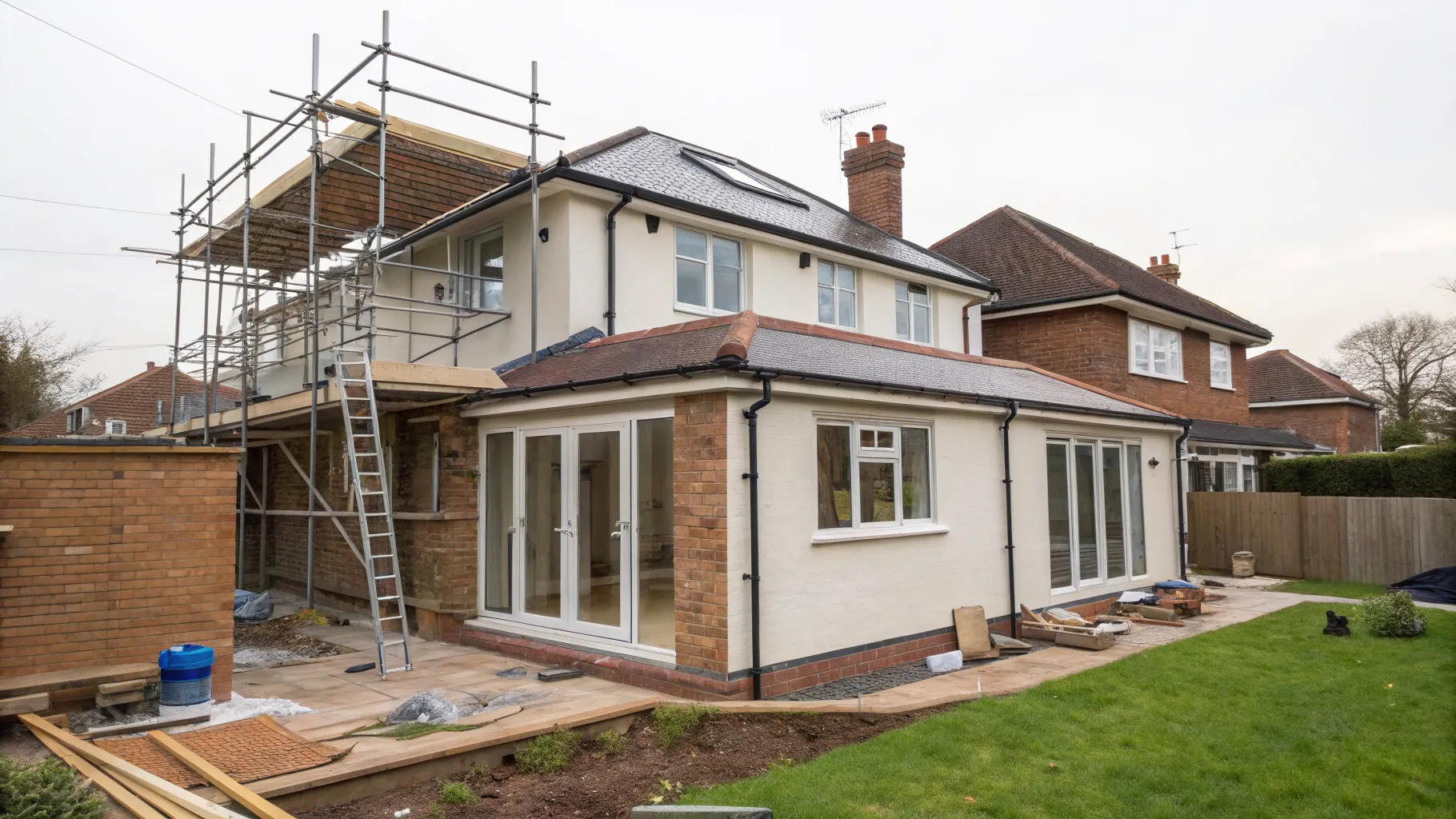
Permitted development rights let you carry out certain building work to a house without applying for full planning permission, as long as you stay inside a set of legal limits and conditions. They come from secondary legislation, The Town and Country Planning (General Permitted Development) (England) Order 2015 (the GPDO), and they are best understood as a right with strings attached, not a loophole. Two things trip people up before they even start. First, breaking a single limit pushes the whole project back into needing planning permission. Second, permitted development has nothing to do with Building Regulations: even work that needs no planning permission still has to satisfy structural safety, fire, insulation, drainage and electrical standards through Building Control.
This guide sets out what you can build under permitted development in England, the conditions that bind every project, where these rights are restricted or removed, and how to prove your build was lawful with a Lawful Development Certificate.
What are permitted development rights?
Permitted development (PD) rights are a national grant of planning permission, given in advance, for specific types of householder building work. Instead of applying to your council for each job, you check your proposal against the published limits. If it fits, you can build. If it does not, you apply for planning permission in the normal way.
These rights apply to houses. They do not apply to flats, maisonettes, or homes that were themselves created through a change-of-use permitted development right. This is the single most common misunderstanding we see. If you live in a flat, you have no householder PD rights at all, and even minor external works need a planning application.
Permitted development vs planning permission
Planning permission is a decision your local planning authority makes about your specific proposal, weighing it against local and national policy. Permitted development skips that case-by-case decision because the work falls within categories the government has already judged acceptable in principle. The trade-off is that PD comes with hard, non-negotiable limits. There is no room to argue that your slightly oversized extension is “still in keeping”. Either it complies or it needs an application. If you are weighing a build that sits near the edges of the rules, our guide on whether you need planning permission for an extension walks through the decision in more detail.
What “the original house” means (and the 1 July 1948 date)
Every PD allowance is measured against the original house, not the house as you bought it. The original house is the property as it was first built, or as it stood on 1 July 1948 if it is older than that.
This matters enormously. If a previous owner already added a rear extension, that extension eats into your allowance. You do not get a fresh quota when you buy the place. Before you measure anything, you need to know what the house looked like originally and what has been added since, because all of those additions count against your remaining permitted volume and footprint.
Do I need planning permission? A quick way to decide
You can usually answer “do I need planning permission” by running through a short chain of questions:
- Is it a house or a flat? Flats and maisonettes have no householder PD rights. Stop here and assume you need permission.
- Is the property on designated land or subject to an Article 4 direction? Conservation areas, National Parks, National Landscapes (formerly AONBs), the Broads and World Heritage Sites all have tighter rules, and an Article 4 direction can remove PD rights entirely. If either applies, many PD rights are reduced or gone.
- Is it a listed building? Listed buildings have a separate consent regime. Assume you need permission.
- Does the work fall fully within the PD limits and conditions below? If yes, it is permitted development. If you break even one limit, you need to apply.
If you come out the other end inside the limits, you can build under PD. If not, you apply for planning permission. Either way, it is worth confirming with your council, because Article 4 directions and estate planning conditions are local and will not show up in the national rules.
What you can build under permitted development
Rear extensions
Single-storey rear extensions are the most common PD project. The standard limits, measured from the original rear wall, are:
- 3 metres for a terraced or semi-detached house.
- 4 metres for a detached house.
- Maximum height of 4 metres overall.
- Within 2 metres of a boundary, the eaves height is capped at 3 metres.
There is also a “larger home extension” route that roughly doubles the depth: up to 6 metres for a terraced or semi-detached house, and up to 8 metres for a detached house. This route is not available on designated land or on a Site of Special Scientific Interest, and it is not automatic. You must use the prior approval and neighbour consultation scheme: you notify the council before building, the council notifies the adjoining neighbours, and if a neighbour objects the council decides whether the impact is acceptable. This scheme was made permanent in 2019. The headline 6 and 8 metre figures are real, but they are not simply “allowed”, they come with this notification step attached.
Two-storey and side extensions
A two-storey or multi-storey rear extension can extend up to 3 metres beyond the original rear wall, but it must sit at least 7 metres from the rear boundary (the boundary opposite the rear wall). The roof pitch should match the existing house as far as practicable, and any upper-floor windows in a side elevation must be obscure-glazed and non-opening below 1.7 metres from the floor.
Side extensions under PD are single-storey only. They can be no more than 4 metres high, and no wider than half the width of the original house. A two-storey side extension always needs full planning permission.
Loft conversions and dormers
Roof extensions are governed by a volume allowance, measured in cubic metres of additional roof space:
- 40 cubic metres for terraced houses.
- 50 cubic metres for detached and semi-detached houses.
This allowance is cumulative since the original build. Any earlier roof enlargement, including a dormer a previous owner added, counts against your total. Most pages bury this point, and it is exactly why people run out of allowance without realising.
Within the volume limit, rear and side dormers are generally fine. They must be set back at least 20 centimetres from the original eaves, and they must not exceed the highest part of the existing roof. Side-facing windows must be obscure-glazed, with any opening at least 1.7 metres above the floor.
The hard rule to remember: a dormer on a roof slope that faces a highway always needs planning permission. There is no front-facing roof extension under PD, no matter how modest. “It’s just a loft” does not get you past this.
Outbuildings, garden rooms and sheds
Sheds, garden rooms, detached garages, summerhouses and similar structures are permitted as long as they are incidental to the enjoyment of the house. That means storage, a home office, a gym or a hobby space. It does not mean self-contained living accommodation, sleeping space, or a separate dwelling. This single word, “incidental”, is what kills “garden annexe”, spare-bedroom and holiday-let projects under PD. If anyone is going to sleep there or live there independently, you need planning permission.
The physical limits:
- Must not be forward of the principal elevation (the front wall facing a highway).
- Single storey only, with a maximum eaves height of 2.5 metres.
- Maximum overall height of 4 metres for a dual-pitched roof, or 3 metres for any other roof.
- If any part is within 2 metres of a boundary, the maximum height drops to 2.5 metres.
- The footprint counts towards the 50% curtilage rule (see below).
A useful aside on Building Control: a garden room under 30 square metres of internal floor area, single storey, with no sleeping accommodation, is typically exempt from Building Regulations, and if it is of combustible construction it should be sited at least 1 metre from any boundary to keep that exemption. That is a separate question from planning, but it is the one owners ask next.
Porches, driveways and hardstanding
A porch is permitted development where its floor area is no more than 3 square metres, no part is more than 3 metres above ground level, and no part is within 2 metres of any boundary that fronts a highway.
For driveways and hardstanding, you can usually lay a new surface under PD, but drainage matters. If you create more than 5 square metres of new impermeable hardstanding between the house and the highway, you need either a permeable surface or provision to drain the run-off to a permeable area within your property. Note also that forming or widening a dropped kerb across the public footway is a separate highways matter handled by the council’s highways department, not a planning one.
Heat pumps, solar panels and EV chargers (2025 changes)
The rules on air source heat pumps and EV charging were eased under The Town and Country Planning (General Permitted Development) (England) (Amendment) Order 2025 (SI 2025/560), in force from 29 May 2025. This is recent, and most older guides have not caught up:
- Air source heat pumps: the old 1-metre-from-boundary rule has been removed, the maximum unit size has increased from 0.6 to 1.5 cubic metres, air-to-air (cooling) units are now covered, and detached houses can install more than one unit under PD. The 0.6 cubic metre cap still applies to units serving blocks of flats.
- EV chargepoints: domestic installation has been eased further under PD, subject to size and siting limits.
- Solar panels: allowed under PD subject to conditions (this is long-standing, not part of the 2025 order). They must be sited to minimise their effect on the building’s appearance and on the amenity of the area, with limits on how far they protrude and where they sit. Conservation areas have tighter rules.
The conditions that apply to everything
Whatever you are building, a set of universal conditions runs underneath all of the above. Miss any one of them and the project loses its PD status:
- The 50% rule. No more than 50% of the curtilage (the land around the original house) may be covered by extensions and outbuildings combined. The footprint of the original house itself is excluded from this calculation.
- No building forward of the principal elevation. Nothing can project beyond the front wall that faces a highway.
- Height ceilings. No part of an extension may exceed the height of the highest part of the existing roof, nor exceed the existing eaves height.
- Matching materials. The external materials must be of a similar appearance to the existing house.
- No verandas, balconies or raised platforms under PD.
These conditions are cumulative with the project-specific limits. A rear extension can be the right depth and height and still fail because it pushes total curtilage coverage past 50%, or because the cladding does not match.
When permitted development does not apply
PD rights are restricted or removed entirely in several common situations, and checking for these should be your first move, not your last.
- Flats and maisonettes. No householder PD rights at all.
- Designated land (Article 2(3)). Conservation areas, National Landscapes (formerly Areas of Outstanding Natural Beauty), National Parks, the Broads and World Heritage Sites. On designated land, side extensions, larger rear extensions, cladding and some roof works are removed or tightened.
- Article 4 directions. A council can issue an Article 4 direction that withdraws specific PD rights across a defined area, which is common in conservation areas. Where one applies, work that would normally be PD needs a full planning application. These are local, so you must check with your council.
- Listed buildings. A separate Listed Building Consent regime applies. Assume you need permission.
- New-build estates. Developers and councils frequently strip or limit PD rights through planning conditions attached to the original estate consent. A house being new does not mean it has full rights. Check the conditions on the original planning permission.
If your project would normally be permitted but you are inside one of these categories, you are back to a planning application. Should that application be turned down, our guide on what to do when planning permission is refused covers your options.
Building Regulations still apply
This deserves its own section because owners conflate it with planning constantly. Planning permission and Building Regulations are two separate approvals from two separate systems.
Planning is about whether you are allowed to build the thing at all: its size, siting, appearance and impact on neighbours and the area. Building Regulations are about whether the thing is safe and sound: structural stability, fire safety and escape, insulation and energy efficiency, drainage, ventilation and electrical work. An extension can be fully within permitted development, needing no planning application whatsoever, and still require Building Control sign-off at several stages.
In practice that means even your “no planning permission needed” loft conversion or rear extension will involve approved plans, site inspections and a completion certificate from Building Control. We set out exactly how the two regimes differ in our guide on Building Regulations versus planning permission. Treat them as two boxes you may need to tick, not one.
One more neighbour-facing system can apply alongside both: if you build on or near a shared boundary, dig foundations close to a neighbour’s structure, or work on a party wall, the Party Wall etc. Act 1996 may require you to serve formal notice first. That obligation is independent of planning and Building Regulations. See our guide on how to serve a party wall notice for the procedure.
How to prove your project is legal: the Lawful Development Certificate
When you build under permitted development, no council ever stamps the work as approved, because by definition you did not need their permission. That is fine until the day someone asks you to prove it: a buyer’s solicitor, a mortgage lender, or a neighbour in a dispute. The answer to that problem is a Lawful Development Certificate (LDC).
An LDC is a formal document from your council confirming that a development is lawful. It is not planning permission; it certifies that you did not need planning permission in the first place. There are two types:
- Proposed: you apply before you build, to confirm the work would be lawful as permitted development.
- Existing: you apply after the fact, for example to confirm that an existing structure or use is now lawful, or immune from enforcement.
You apply through the Planning Portal’s Lawful Development Certificate route, and you need to submit scaled drawings: a location and site plan plus drawings of the works. The council normally decides within 8 weeks of validating the application. The fee for a proposed-use certificate is set at half the fee for the equivalent full planning application, with a portal processing charge on top.
The real-world reason to get one is conveyancing. When you sell or remortgage, solicitors routinely ask for evidence that any extension, loft or outbuilding was lawful. A certificate is the cleanest possible proof, it removes the risk of a sale falling through over a planning query, and it settles arguments before they start. Getting a proposed LDC before you build is the strongest position of all: you have written confirmation from the council that your project is PD before a single brick is laid. For the definitive technical detail on all of the limits above, the government’s own Permitted development rights for householders: technical guidance is the primary source.
Common permitted development myths and mistakes
A handful of misunderstandings cause most of the trouble. Here are the ones worth correcting before you commit money:
- “Permitted development means I never have to tell anyone.” Not true for larger rear extensions, which require the prior approval and neighbour consultation step before you build.
- “My flat has PD rights.” It does not. Householder PD applies to houses only.
- “I bought a house with an extension, so I get a fresh allowance.” No. Limits are measured from the original house, and any previous extensions and roof works count against you.
- “PD overrides Building Regulations.” No. They are two separate approvals and both can apply.
- “My garden room can be a granny annexe, a spare bedroom or a holiday let.” No. Outbuildings must be incidental to the house. Sleeping or self-contained living needs planning permission.
- “A front dormer is fine, it’s just a loft.” No. Roof extensions on a slope facing a highway are excluded from PD.
- “My neighbour can block my extension.” If the work is genuinely within PD limits, neighbours cannot stop it through the planning system. Only the larger-extension prior-approval scheme gives them a formal say.
- “A new-build house has the same rights as any other.” Often it does not, because estate planning conditions and Article 4 directions frequently remove rights. Check the original consent.
Frequently asked questions
Do I need planning permission for a house extension? Not always. A single-storey rear extension within the PD limits (3 metres deep for a terraced or semi-detached house, 4 metres for a detached one, up to 4 metres high) does not need planning permission, provided it also meets the universal conditions such as the 50% rule and matching materials. Go beyond those limits, build a two-storey side extension, or sit on designated land, and you will need an application.
How big can I build an extension without planning permission? For a single-storey rear extension, the standard PD depth is 3 metres beyond the original rear wall for terraced and semi-detached houses, and 4 metres for detached houses, capped at 4 metres in height. The larger home extension route allows up to 6 metres (terraced or semi-detached) or 8 metres (detached), but only with prior approval and neighbour consultation, and not on designated land.
Do I need planning permission for a loft conversion or dormer? A loft conversion within the volume allowance (40 cubic metres for a terraced house, 50 for detached or semi-detached) is usually permitted development. The allowance is cumulative since the original build, so earlier roof works count against it. A dormer on a roof slope facing a highway always needs planning permission.
Do I need planning permission for a shed or garden room? Usually not, if it is genuinely incidental to the house: storage, an office, a gym or a hobby room, single storey, no more than 2.5 metres at the eaves, within the height limits, behind the front wall, and inside the 50% curtilage rule. A structure meant for sleeping or independent living is not incidental and needs planning permission.
How close to the boundary can I build? For a single-storey rear extension, you can build up to a boundary, but within 2 metres of one the eaves height is capped at 3 metres. For an outbuilding, any part within 2 metres of a boundary brings the maximum height down to 2.5 metres. A two-storey rear extension must stay at least 7 metres from the rear boundary.
What is the 50% rule? No more than half the curtilage, the land around the original house, may be covered by extensions and outbuildings combined. The footprint of the original house itself does not count towards the 50%. Once your additions reach that limit, further extensions or outbuildings need planning permission even if they would otherwise be within PD.
Do permitted development rights apply to flats? No. Householder PD rights apply only to houses. Flats and maisonettes have no householder PD rights, so even minor external alterations need a planning application.
What is an Article 4 direction and how do I know if my house has one? An Article 4 direction is a decision by your council to withdraw specific permitted development rights across a defined area, often a conservation area. Where one applies, work that would normally be PD needs a full planning application. They are local and not shown in the national rules, so check directly with your local planning authority.
Do I need planning permission in a conservation area? Often yes for work that would be PD elsewhere. On designated land such as a conservation area, side extensions, larger rear extensions, cladding and rear or side roof extensions are commonly removed or tightened, and an Article 4 direction may remove more. Always check with your council before assuming a project is permitted.
Do I need planning permission for a heat pump, solar panels or an EV charger? Usually not since 29 May 2025, when the rules were eased. Air source heat pumps no longer have the 1-metre-from-boundary restriction and can be larger units, EV chargepoints are easier to install, and solar panels are permitted subject to siting and appearance conditions. Tighter rules still apply in conservation areas, so check the specific conditions for your property.
Is a Lawful Development Certificate worth getting? For most owners, yes. It is formal proof from the council that your work was lawful permitted development, and conveyancing solicitors and mortgage lenders routinely ask for that proof when you sell or remortgage. Getting a proposed-use certificate before you build gives you written confirmation that the project is PD before you start.
Do I need permission for a driveway or a dropped kerb? You can usually lay a driveway under PD, but if you create more than 5 square metres of new impermeable surface between the house and the highway, you need a permeable surface or drainage to a permeable area. Forming or widening a dropped kerb across the public footway is a separate highways consent handled by the council, not a planning matter.
What happens if I build without permission when I needed it? The council can take enforcement action, which may require you to alter or remove the work. You can sometimes regularise it with a retrospective planning application, though approval is not guaranteed. There are also time limits after which unauthorised work can become immune from enforcement, but relying on those is risky, and the cleanest route is to confirm your rights, ideally with a Lawful Development Certificate, before you build.
More from Sareth Build Journal
Keep reading
Do You Need Planning Permission for an Extension? Permitted Development Limits Explained
Do I need planning permission for an extension? Often no, thanks to permitted development. Here are the exact UK size limits, rules and exceptions.
Read entry
How to Serve a Party Wall Notice: Step-by-Step Template and Timeline
How to serve a party wall notice in the UK: the steps, a free template, exact notice periods and the timeline from service to award.
Read entry
Planning Permission Refused: Your Options for Appeal and Resubmission
Planning permission refused? What to do next: read the refusal reasons, fix and resubmit a revised scheme, or appeal to the Planning Inspectorate.
Read entry