Kitchen Extension Cost: Side Return vs Rear vs Wraparound
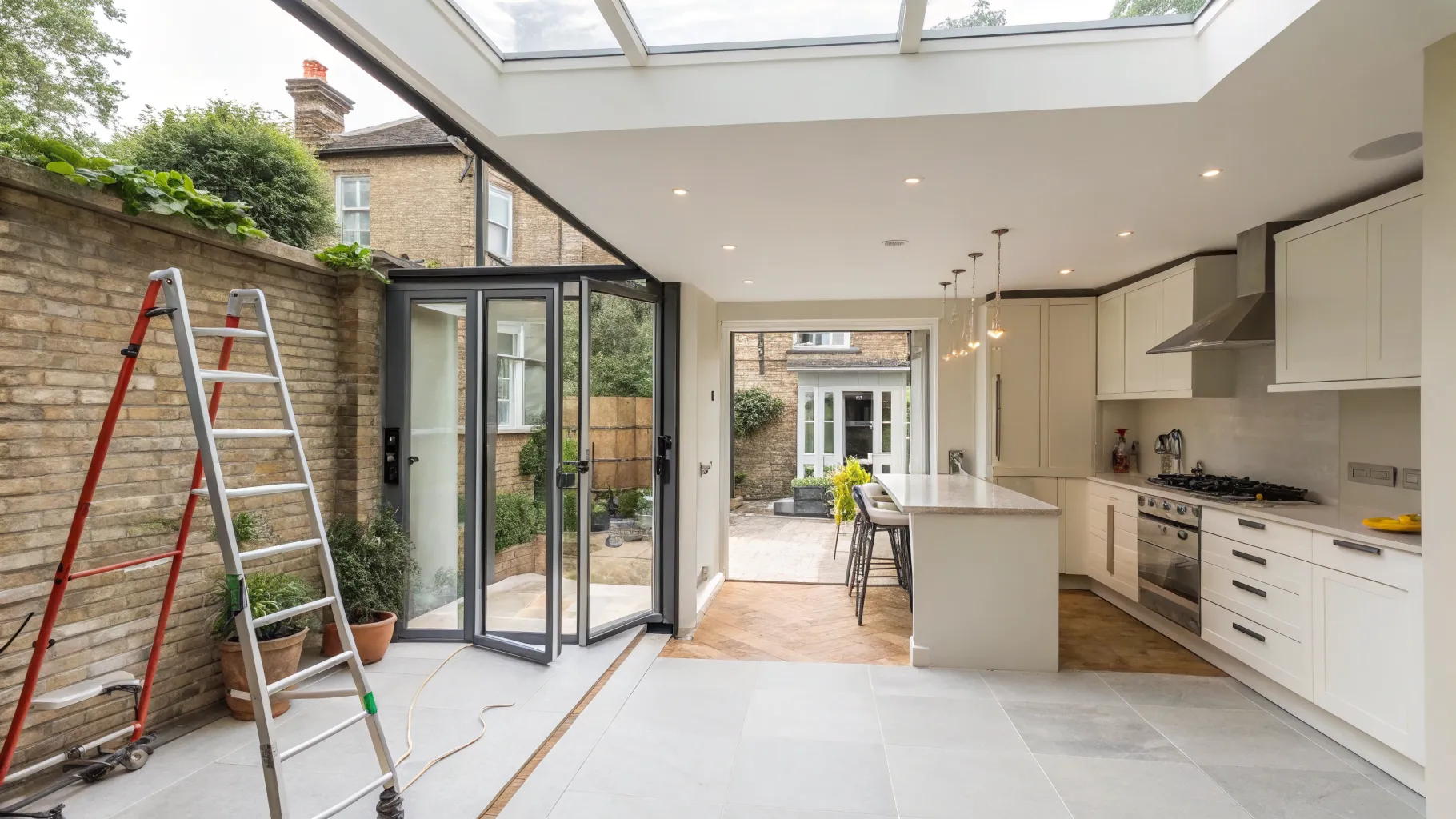
The kitchen extension cost most UK homeowners face in 2026 lands between roughly £30,000 and £70,000 for a single-storey build, or about £1,800 to £3,000 per square metre for the shell. The wide spread is not vagueness: it reflects which type of extension you build (side return, rear or wraparound), where you live, and how the figures are split between the structure and the kitchen that goes inside it. This guide breaks the numbers down by extension type and, just as importantly, flags the costs that quotes often leave out.
These are indicative ranges to sanity-check a quote, not a substitute for one. Every site is different, and London prices run well above the national average.
What drives the price
Before the type, three things move the total more than anything else:
- Size. Most builders price by the square metre, so floor area is the biggest lever.
- Where you live. London and the South East typically cost 20 to 40 per cent more than the UK average for the same work.
- What is included. The headline per-square-metre rate is almost always the build shell only. The kitchen units, worktops, appliances and final decoration are a separate, substantial cost on top.
For the wider picture beyond kitchens, see our single-storey extension cost guide.
Kitchen extension cost by type
Side return extension
A side return fills in the narrow, often wasted alley down the side of a Victorian or Edwardian terrace. Footprints are usually small, around 8 to 15 square metres, but the transformation to a galley kitchen is dramatic. Because side returns involve fiddly work against a party wall and a new roof, the rate per square metre tends to be at the higher end, commonly £2,500 to £3,500 per square metre. As a whole-project figure, side returns often fall in the £35,000 to £60,000 range, though a smaller one can be less.
Rear extension
A rear extension pushes straight out into the garden and is the most common way to add a bigger kitchen-diner. Per square metre it is often a little cheaper than a side return because the build is simpler, broadly £2,200 to £3,200 per square metre. The total depends heavily on how far you extend; a modest rear extension can sit near the bottom of the overall range, while a large one rivals a wraparound. In London, an all-in single-storey rear extension can run from around £80,000 to £150,000 once everything is included.
Wraparound extension
A wraparound combines a side return and a rear extension into an L-shape around the back corner of the house, giving the largest open-plan kitchen of the three. It is the most expensive option simply because it is the biggest, typically £60,000 to £100,000 as a project, at around £2,400 to £3,300 per square metre. If you want a single large kitchen, dining and living space, this is usually the route, and the price reflects the floor area you gain.
The costs that quotes leave out
This is where budgets blow up. Beyond the build shell, budget for:
- The kitchen itself. Units, worktops, appliances and installation are separate from the build and can easily add many thousands, more for a high-end kitchen. Decide this early, because it is often underestimated.
- Professional fees. Architect or designer, structural engineer, and a planning application or lawful development certificate. Allow a meaningful percentage of the build cost.
- Building control and party wall. Building control sign-off is required, and a side return or rear extension on a terrace usually triggers a party wall notice, with surveyor fees if your neighbour dissents.
- Glazing and rooflights. Bi-fold or sliding doors and roof lanterns are a big part of the look and a big part of the bill. They are rarely in a basic per-square-metre rate.
- Knock-through and making good. Removing the old rear wall, steel beams, new flooring through the whole space, plastering, electrics and redecoration of adjoining rooms.
- Contingency. Keep at least 10 to 15 per cent back for the surprises that older houses always hide, drains, foundations, unexpected ground conditions.
- VAT. Most home extension work carries VAT at the standard rate, which is included in builders’ quotes but worth confirming.
How to keep a kitchen extension affordable
- Do not over-extend. Three metres of well-designed rear extension often beats five metres that swallows the garden and the budget. Light and layout matter more than raw depth.
- Spend on glazing, save on footprint. A roof lantern can make a modest extension feel far bigger than a larger but darker one.
- Get a fixed-price contract. Agree a detailed specification and a fixed price with stage payments rather than an open day rate. Our guide on choosing and vetting a builder covers what to check.
- Confirm the planning route first. Many single-storey rear extensions fall under permitted development, which avoids a full planning application. Check before you design; see do you need planning permission for an extension.
To estimate your own project, try our extension cost calculator. For independent guidance on hiring and contracts, the Federation of Master Builders and the Planning Portal are reliable sources.
Frequently asked questions
How much does a kitchen extension cost in the UK? A single-storey kitchen extension typically costs £30,000 to £70,000 in 2026, or about £1,800 to £3,000 per square metre for the build shell. The total depends on size, your region and the type of extension, and it excludes the kitchen units, worktops and appliances, which are a separate cost on top.
Which is cheaper, a side return or a rear extension? Per square metre, a rear extension is usually a little cheaper than a side return, because a side return involves fiddly work against the party wall and a new roof over a narrow space. However, side returns are often smaller, so the total project cost can still be lower simply because there is less floor area.
How much does a wraparound kitchen extension cost? A wraparound extension, which combines a side return and a rear extension into an L-shape, typically costs £60,000 to £100,000 as a project, at around £2,400 to £3,300 per square metre. It is the most expensive option because it adds the most floor area and gives the largest open-plan kitchen.
Does the kitchen extension cost include the new kitchen? Usually not. Builders’ per-square-metre rates cover the build shell, not the kitchen units, worktops, appliances or final decoration. Those are a separate and often substantial cost, so decide your kitchen specification early and budget for it on top of the structural build figure.
Do I need planning permission for a kitchen extension? Often not. Many single-storey rear and side extensions fall under permitted development rights, which avoid a full planning application, though limits apply on size, height and how close you build to boundaries. Always confirm your specific case before designing, as listed buildings, conservation areas and Article 4 directions can remove those rights.
More from Sareth Build Journal
Keep reading
Do You Need Planning Permission for an Extension? Permitted Development Limits Explained
Do I need planning permission for an extension? Often no, thanks to permitted development. Here are the exact UK size limits, rules and exceptions.
Read entry
How to Serve a Party Wall Notice: Step-by-Step Template and Timeline
How to serve a party wall notice in the UK: the steps, a free template, exact notice periods and the timeline from service to award.
Read entry
Planning Permission Refused: Your Options for Appeal and Resubmission
Planning permission refused? What to do next: read the refusal reasons, fix and resubmit a revised scheme, or appeal to the Planning Inspectorate.
Read entry