Listed Building Consent: What It Is and When You Need It
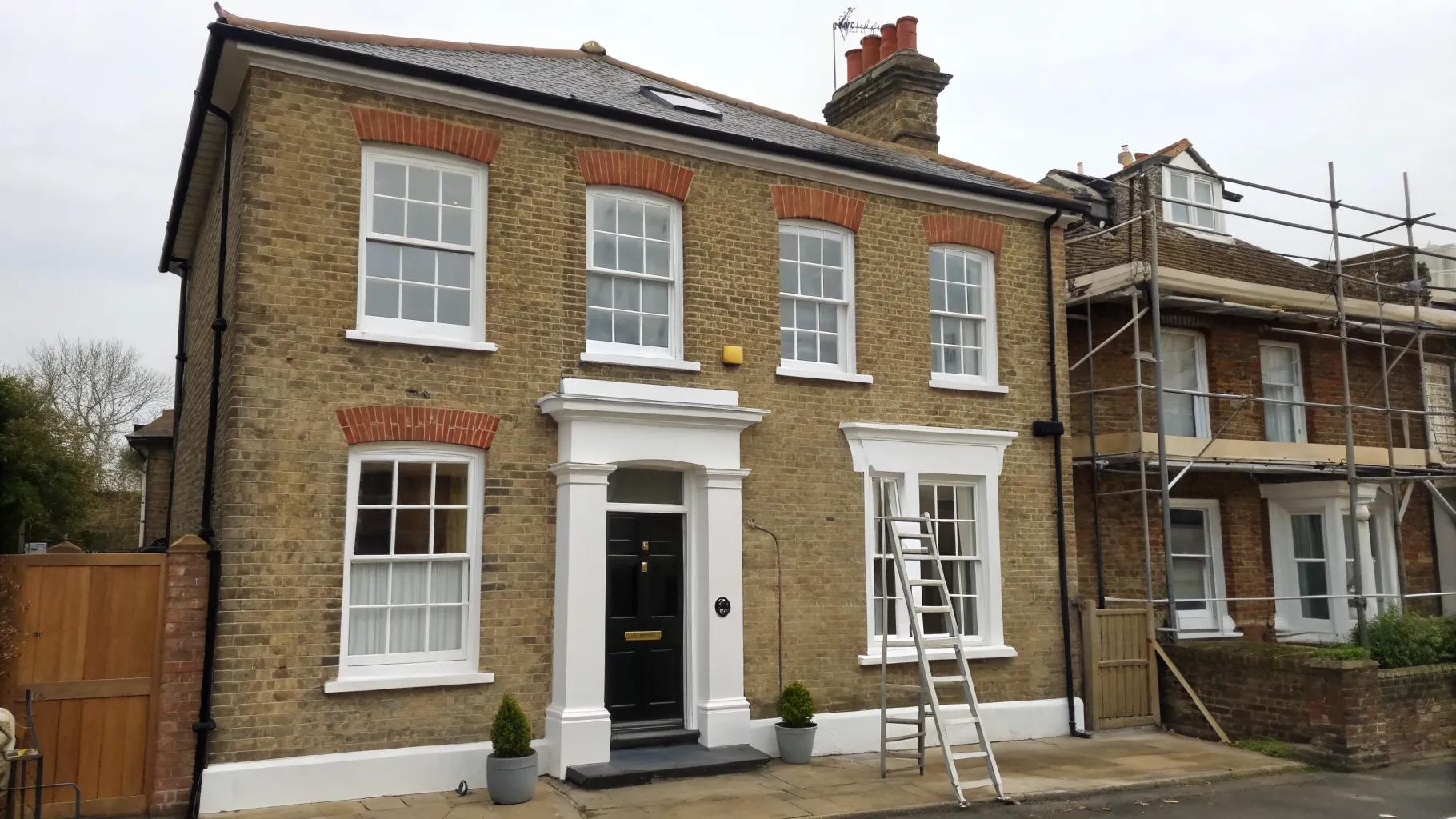
Listed building consent is a permission you need before you alter, extend or demolish a listed building in a way that affects its special architectural or historic interest. It is separate from planning permission, governed by different law, and you often need both: getting one does not grant the other.
What listed building consent actually is
The rule comes from Section 7 of the Planning (Listed Buildings and Conservation Areas) Act 1990. In plain terms, it says no one may carry out works for the demolition of a listed building, or for its alteration or extension in any manner that would affect its character as a building of special architectural or historic interest, unless those works are authorised. You can read the exact wording on legislation.gov.uk.
That last phrase is the test. The trigger is not “am I changing the building” but “does this work affect what makes it special”. A like-for-like repair usually does not. Ripping out an original staircase usually does, even if the staircase is never mentioned in the listing.
Listed building consent applies in England and Wales. Scotland runs a separate system with Historic Environment Scotland, and Northern Ireland has its own regime, so guidance written for England does not transfer cleanly across the border.
Listed building consent vs planning permission
These two are constantly conflated, and that confusion is where owners get caught out. They are different consents under different statutes, decided on different criteria.
| Listed building consent | Planning permission | |
|---|---|---|
| Governing law | Planning (Listed Buildings and Conservation Areas) Act 1990 | Town and Country Planning Act 1990 |
| What it controls | Works affecting the special interest, inside and out | Development and changes of use |
| Application fee | No fee | Fee payable |
| Covers the other? | No | No |
A rear extension on a listed cottage can need both: planning permission for the development, and listed building consent for the impact on the historic fabric. Approving one tells you nothing about the other. Listing also strips out your usual fallbacks. There are no permitted development rights for new structures within the curtilage of a listed building, so a shed, garage, garden wall or fence that would ordinarily be permitted development still needs a full planning application, and consent too if a listed or curtilage-listed structure is affected. That cuts straight across the freedoms set out in permitted development rights explained: if your home is listed, assume those rights do not apply.
When you need consent, and when you don’t
The honest answer is that it depends on whether the work affects special interest, not on how big the job is.
Generally needs consent: - Replacing windows or doors with a different design, material or profile - Removing, moving or altering internal walls, staircases, fireplaces, plasterwork or joinery - Re-roofing in a different material, or significant structural work - Extensions, demolition, and any new openings - Fitting a new kitchen or bathroom where it disturbs historic fabric or layout
Generally does not need consent: - Routine maintenance and genuine like-for-like in-situ repairs (same material, dimensions, design, function and finish) - Replacing a single broken pane of glass like-for-like, the classic example - Redecorating in the ordinary sense, unless you are stripping or covering something of interest
The grey areas are real. A new kitchen, double glazing, solar panels or an EV charger can all be fine or can all need consent, depending on where they go and what they touch. When you are unsure, talk to the council’s conservation officer first. If you genuinely believe consent is not required, you can apply for a Certificate of Lawfulness of Proposed Works to a listed building, introduced by Section 26H of the 1990 Act. That gets you a written decision from the authority before you start, which is the single best way to protect yourself and any future sale.
The interior is protected too
Listing protects the whole building, inside and out. This is the point that catches the most people. The list description on the National Heritage List for England might only describe the front elevation, but that text is a summary, not a shopping list of what is protected. Interior layout, fittings, joinery, plasterwork, fireplaces, panelling and staircases can all be protected even though they are never named.
So “it wasn’t in the listing” is not a defence. If a feature contributes to the building’s special interest, removing or altering it can need consent regardless of whether anyone wrote it down.
Grade, curtilage and what counts
There are three grades in England:
| Grade | Meaning | Roughly |
|---|---|---|
| Grade I | Exceptional interest | ~2.5% |
| Grade II* | Particularly important, more than special interest | ~5.8% |
| Grade II | Special interest | ~91.7% |
Grade does not change whether you need consent. It is required regardless of grade. The grade only affects how the works are assessed and who has to be consulted. A Grade II cottage window has the same baseline protection as a Grade I feature. So if you own a Grade II house, the most common kind by a wide margin, do not assume the protection is light.
Curtilage is the other trap. Structures within the curtilage of a listed building are usually “curtilage listed”, and need consent too, if they were erected before 1 July 1948, were in the same ownership at the time of listing, and had an ancillary relationship to the main building. That can pull in historic boundary walls, gates, railings, outbuildings and stables you might not think of as “the listed building” at all.
Cost, timing and the realistic process
There is no application fee for listed building consent. If you also need full planning permission, that application does carry a fee. You will usually pay for drawings, a heritage statement and possibly specialist advice, so the process is not free even though the application is.
The statutory target is a decision within 8 weeks of the authority validating your application, including a 21-day public consultation period. In practice, complex cases run longer, especially anything Historic England must be consulted on. Applications are decided by the local planning authority, normally the conservation officer or planning department of the district, borough or unitary council, not by Historic England. Historic England is a statutory consultee on certain applications, such as demolition and most works to Grade I and Grade II* buildings. If you are not sure which authority handles your building, see how to find your local planning authority.
A sensible route looks like this: an informal pre-application chat with the conservation officer, then a properly drawn application with a heritage statement, then the 8-week clock and consultation. Once granted, consent normally lapses if works are not begun within 3 years, mirroring planning permission. Useful background sits on the Planning Portal’s listed building consent page.
The penalties, and why there is no time limit
This is the part most pages soften, and it is the part that matters most. Carrying out unauthorised works to a listed building, or breaching a consent condition, is a criminal offence under Section 9 of the 1990 Act. It is a strict-liability offence: the prosecution does not have to prove you intended any harm or even knew the building was listed.
The penalties scale with the court:
| Court | Maximum penalty |
|---|---|
| Magistrates’ court | Unlimited fine and/or up to 6 months’ imprisonment |
| Crown Court | Unlimited fine and/or up to 2 years’ imprisonment |
For offences committed on or after 12 March 2015, the old £20,000 cap in the magistrates’ court was removed, so the fine is unlimited at either level. Older guidance still quotes the £20,000 figure, but it no longer reflects the law.
The detail that catches out renovators and buyers: there is no time limit for enforcement against unauthorised works to a listed building. Ordinary planning breaches eventually become immune, but listed building breaches never do. A buyer can inherit liability for alterations a previous owner made decades ago. This is exactly why a Certificate of Lawfulness, and a careful look at past works during a purchase, are worth the trouble.
One more myth to retire: listed status no longer gives a VAT advantage. The zero-rating on “approved alterations” to listed dwellings was abolished on 1 October 2012, and the transitional relief for older contracts ended on 30 September 2015. Most alteration work is now charged at the standard 20% rate.
Frequently asked questions
How is listed building consent different from planning permission? They are separate consents under different laws. Planning permission controls development and use; listed building consent controls works that affect a building’s special interest. You frequently need both, and being granted one does not grant the other.
Do I need consent to replace windows in a listed building? Usually yes, if you are changing the design, material or profile, because windows often contribute to special interest. A genuine like-for-like in-situ repair, such as replacing one broken pane, normally does not. If in doubt, ask the conservation officer or apply for a Certificate of Lawfulness before ordering anything.
Is the interior protected or just the outside? The whole building is protected, inside and out. Internal staircases, fireplaces, plasterwork and joinery can all be covered even if the listing text only describes the facade. The list description is a summary, not a definitive list of protected features.
Does the grade change what I’m allowed to do? No. Consent is required regardless of grade. Grade reflects significance and influences how works are assessed and who is consulted, not whether you need permission. A Grade II building has real protection.
What happens if works were done without consent before I bought the house? You can inherit the liability. There is no time limit for enforcement against unauthorised works to a listed building, so a breach by a previous owner does not expire. Check the history of works during purchase, and consider a Certificate of Lawfulness for anything uncertain.
Can I build an extension or shed under permitted development if my house is listed? No. There are no permitted development rights for new structures within the curtilage of a listed building. You will need a full planning application, plus listed building consent if a listed or curtilage-listed structure is affected.
More from Sareth Build Journal
Keep reading
Do You Need Planning Permission for an Extension? Permitted Development Limits Explained
Do I need planning permission for an extension? Often no, thanks to permitted development. Here are the exact UK size limits, rules and exceptions.
Read entry
How to Serve a Party Wall Notice: Step-by-Step Template and Timeline
How to serve a party wall notice in the UK: the steps, a free template, exact notice periods and the timeline from service to award.
Read entry
Planning Permission Refused: Your Options for Appeal and Resubmission
Planning permission refused? What to do next: read the refusal reasons, fix and resubmit a revised scheme, or appeal to the Planning Inspectorate.
Read entry