Part L Building Regulations for an Extension: 2026 Rules
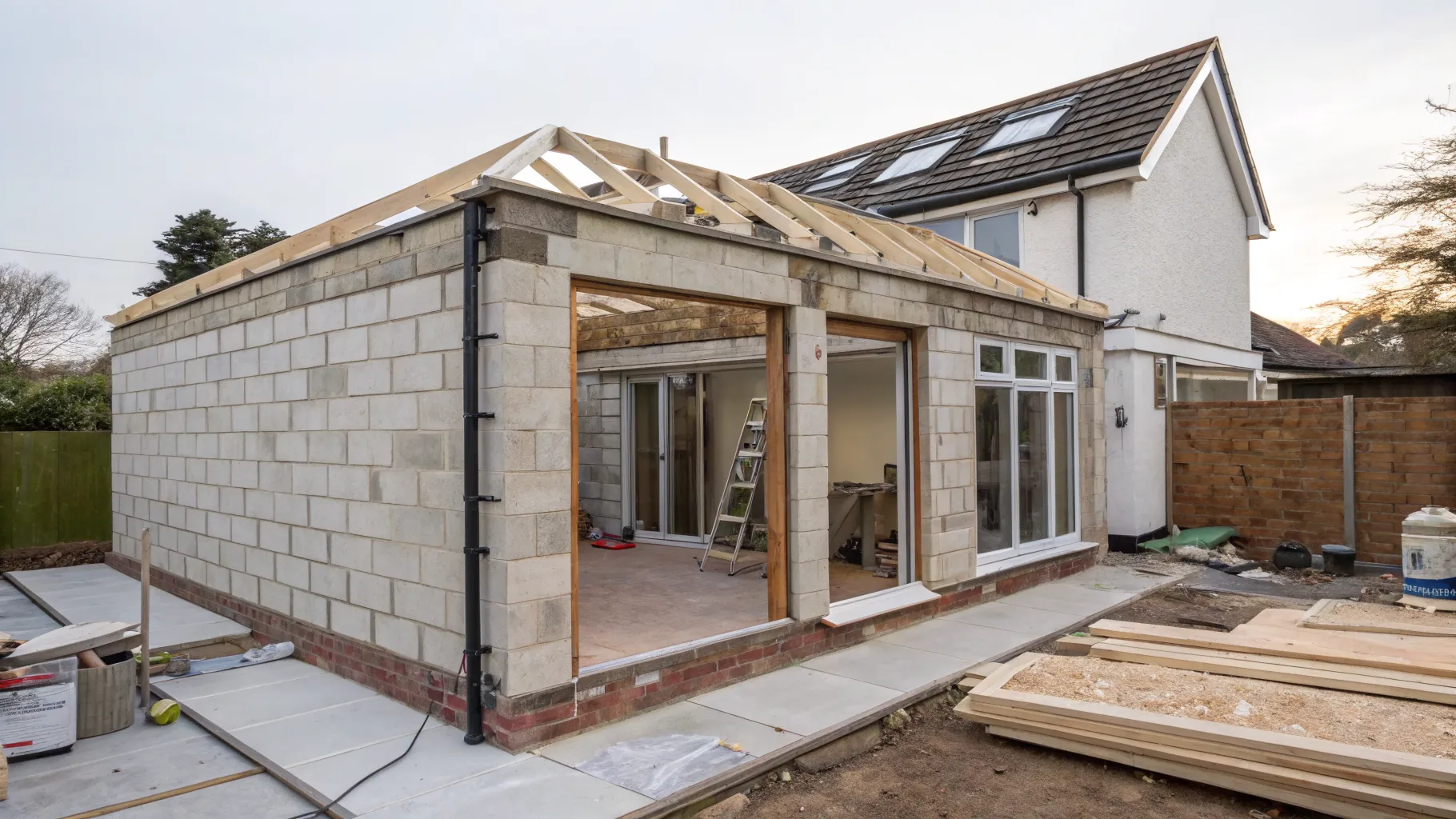
If you are planning an extension for 2026 or 2027, you have probably seen headlines about “Part L 2026” and the Future Homes Standard, and worried you will be forced to fit a heat pump or solar panels. You will not. The Part L building regulations that actually govern your extension are the 2021 edition (incorporating the 2023 amendments), the rules for work on existing dwellings, and those have been in force since 15 June 2022. The much-publicised Future Homes Standard is for new-build homes only, and it does not come into force until 24 March 2027. This guide separates the two clearly, then gives you the U-values, the glazing limit and the heating rules your extension genuinely has to meet.
Why “Part L 2026” almost certainly does not apply to your extension
The confusion comes from the name. The new edition of Approved Document L, sometimes called “Part L 2026”, was laid in law as The Building Regulations etc. (Amendment) (England) Regulations 2026 (SI 2026/335). Despite the 2026 label, it comes into force on 24 March 2027 for ordinary dwellings (parts for higher-risk buildings follow on 24 September 2027). It carries the Future Homes Standard: a new-build notional specification that effectively ends gas heating, adds mandatory solar PV across roughly 40% of the ground-floor area, and tightens the air-tightness benchmark from 5 to 4 m³/(m²·h).
The key point for you: that standard is written for new dwellings, not for extensions to existing homes. Your extension is not required to hit the 75% carbon-reduction target, fit a heat pump, or carry solar panels. The government’s own Future Homes and Buildings Standards Building Circular 01/2026 sets out the scope and the 24 March 2027 date.
So which rules bind your extension? Approved Document L Volume 1, Dwellings, 2021 edition incorporating the 2023 amendments. The relevant section is the one covering work on existing dwellings (what builders used to call Part L1B). Those numbers have not changed and are not changing on the dates above. You can read the actual rulebook in the GOV.UK Approved Document L Volume 1 PDF.
There is exactly one place where 2027 touches an extension, and it is not the fabric. If your project also replaces the boiler or whole heating system on or after 24 March 2027, the new-edition low-temperature and efficiency rules for that new system start to apply. The walls, roof, floor and windows of your extension follow the unchanged 2021 figures regardless.
For the wider picture of which consents you need, see our guide to building regulations vs planning permission.
The U-values your new extension fabric must hit
This is where most online tables go wrong. There are two different sets of U-values in Part L: one for the new fabric you build as part of an extension, and a separate, more relaxed set for existing elements you renovate or retain. Mixing them up is why you will see “walls 0.26” or “windows 1.6” floating around. Those are old or refer to retained elements, not the new build target.
Here are the limiting (worst-acceptable) U-values for new thermal elements built as part of an extension under Part L 2021/2023, in W/m²K:
| New element | Limiting U-value (W/m²K) |
|---|---|
| Walls | 0.18 |
| Floors | 0.18 |
| Pitched roof, insulation at rafter level | 0.15 |
| Pitched roof, insulation at ceiling (joist) level | 0.16 |
| Flat roof or roof with integral insulation | 0.18 |
| Windows, roof windows and rooflights | 1.4 |
| Doors | 1.4 (fire doors may stay at 1.8) |
These are limiting values, meaning the worst you are allowed; building tighter is fine and often sensible. In practice, with rigid PIR boards such as Celotex or Kingspan, a typical cavity wall reaches 0.18 W/m²K with full-fill cavity insulation plus an insulated plasterboard finish, and a warm flat roof gets there with roughly 120mm to 150mm of PIR. The roof figures here are the same ones we set out in the loft conversion building regulations guide, because a warm rafter-level roof is the same construction.
The separate table for existing elements you keep or renovate
When your extension means cutting into, renovating or retaining parts of the original house, different limiting values apply to those existing elements:
| Existing or renovated element | Limiting U-value (W/m²K) |
|---|---|
| Roofs | 0.16 |
| Walls (internal or external insulation) | 0.30 |
| Walls (cavity fill) | 0.55 |
| Floors | 0.25 |
These only become a “trigger” when you renovate more than 25% of an element’s surface area (the major renovation rule). For a normal extension you are mostly building new fabric to the first table, not renovating the old house, so the existing-element figures rarely come into play unless you take the over-glazed route described below.
The 25% glazing rule, and how to get round it
Part L limits the total area of openings (windows, roof windows and doors combined) in an extension to a maximum of 25% of the extension’s floor area. So a 20 m² rear extension gets a baseline glazing budget of about 5 m². That sounds tight, and for a glass-box or orangery it is.
There are two ways the rule gives you more room:
- Add back removed or covered openings. Your glazing budget is 25% of the new floor area plus the area of any windows or doors in the original wall that you remove, or that become internal because the extension now covers them. Knock out an old patio door and a window to open up the back of the house, and that area is added to your allowance.
- Prove compliance another way. If you exceed the 25% allowance, building control will not simply refuse it. They will ask for an area-weighted U-value calculation (averaging the better-than-required fabric against the extra glazing), or for SAP calculations if the extension is heavily glazed. The Local Authority Building Control body notes the SAP route is typically needed for very highly glazed extensions, above roughly 50% glass.
The SAP route is how people get a near-fully-glazed garden room signed off. You offset the extra heat loss from all that glass by upgrading the existing house: topping up loft insulation, or fitting a more efficient boiler and heating and hot-water controls. A heavily glazed extension is then compliant because the whole dwelling balances out. This has to be done by an accredited SAP assessor. LABC explains the routes plainly in Can I have a fully glazed extension on my house?.
So yes, you can have the bifolds and the glass box. You just may have to spend some of the budget improving the original house to pay for the glazing in the new one.
Heating, controls and the one real 2027 ripple
An extension usually means extending the heating into the new room. A few points matter:
- Simply running a radiator or two off the existing system into the extension does not, by itself, force a full heating upgrade. But the system must still be able to control the new space; you should not leave the extension unheatable or uncontrollable.
- New heating installs under Part L 2021 expect room-by-room thermostatic control, so thermostatic radiator valves (TRVs) on the new emitters are the norm.
- If a heating system is newly installed or fully replaced, pipework and emitters should be sized for a maximum flow temperature of 55°C or lower. This is the rule that quietly makes a home heat-pump-ready, and it is the bridge toward the future standard.
That last point is the single place 2027 reaches an extension. If your project also swaps the boiler or replaces the heating system on or after 24 March 2027, the new-edition Part L efficiency and low-temperature rules engage for that new system. The fabric rules for the extension itself stay exactly as set out above.
Will I be forced to insulate the rest of my house?
This is the worry that keeps homeowners up, usually under the name “consequential improvements”. For a normal domestic extension, the honest answer is no. The 1000 m² consequential-improvements threshold that triggers whole-building upgrades is a large-building and non-domestic matter, not something a rear extension trips.
There are two situations where existing elements do come into it:
- Heating a previously unheated space. Where fixed heating is provided into an area that was previously cold (or where building control judges the existing building is substantially affected), some upgrade of existing elements can be required.
- The over-glazed SAP route. As above, if you choose to exceed the glazing allowance and balance it with SAP, you are deliberately upgrading the existing house to compensate.
A standard heated extension built to the new-element U-values passes on its own. You are not generally obliged to retrofit the rest of the house. For how this is checked and signed off on site, see building control sign-off for an extension.
Frequently asked questions
Does the Future Homes Standard or “Part L 2026” apply to my extension? No. The Future Homes Standard (the new Approved Document L edition, in force 24 March 2027) is for new-build dwellings. Extensions follow the Part L 2021 rules (incorporating the 2023 amendments) for existing dwellings, which have applied since 15 June 2022 and are unchanged. You are not required to fit a heat pump or solar PV on an extension.
What U-values does an extension need? For the new fabric: walls and floor 0.18 W/m²K, a pitched roof 0.15 (rafter level) or 0.16 (ceiling level), a flat roof 0.18, and windows and doors 1.4. Be careful with figures like “walls 0.26” or “windows 1.6” online; those are old values or apply to renovated existing elements, not to new extension fabric.
Do I need building regulations approval for an extension even under permitted development? Yes. Permitted development is a planning concept; it means you may not need a planning application. It says nothing about building regulations. Almost every extension still needs building control sign-off for structure, insulation, drainage and fire safety. See our guide on whether you need planning permission for an extension.
Can I have a glass-box or fully glazed extension? Yes, within limits. The baseline allowance is glazing up to 25% of the extension floor area, plus any existing openings you remove or cover. To go beyond that, building control will want an area-weighted U-value calculation, or full SAP calculations for very highly glazed designs, where you offset the extra glass by upgrading the existing house. An accredited SAP assessor handles that route.
Will I be forced to insulate or upgrade my whole house? Not for a normal heated extension. The consequential-improvements threshold that forces whole-building upgrades applies to large and non-domestic buildings. The exceptions are heating a previously unheated space, or choosing the over-glazed SAP route, which deliberately relies on upgrading the existing house to compensate.
Do I have to fit a heat pump or solar panels on an extension? No. Those are part of the new-build Future Homes Standard, not the rules for extensions. An extension is governed by the existing-dwelling Part L rules, which set fabric U-values and heating efficiency, but do not mandate low-carbon technology.
Do I need new heating controls when I extend the heating into the new room? Generally yes for the new emitters: thermostatic radiator valves and room-by-room control are expected so the new space can be controlled. Extending a couple of radiators does not force a full system replacement, but the system must still control the extension. If you do replace the whole heating system on or after 24 March 2027, the new low-temperature and efficiency rules apply to it. For the costs and the bigger picture, read our single-storey extension cost guide.
More from Sareth Build Journal
Keep reading
Do You Need Planning Permission for an Extension? Permitted Development Limits Explained
Do I need planning permission for an extension? Often no, thanks to permitted development. Here are the exact UK size limits, rules and exceptions.
Read entry
How to Serve a Party Wall Notice: Step-by-Step Template and Timeline
How to serve a party wall notice in the UK: the steps, a free template, exact notice periods and the timeline from service to award.
Read entry
Planning Permission Refused: Your Options for Appeal and Resubmission
Planning permission refused? What to do next: read the refusal reasons, fix and resubmit a revised scheme, or appeal to the Planning Inspectorate.
Read entry